

Blog
The IQ blog: research without the hype
Longer pieces on where IQ scores come from, what they predict, where the evidence is strong and where an appealing story has outrun it. Every claim on these pages is one we would be willing to defend with a source.
All articles
 Evidence
How to increase your IQ: what the evidence supports and what it does not
Brain-training apps, dual n-back, supplements, music, sleep. Sorting the interventions with evidence behind them from the ones with marketing behind them.
11 min read Methods
How accurate is an IQ test, really?
Reliability, validity and the standard error of measurement, explained without the jargon and with the numbers that actually apply.
10 min read Research
The Flynn effect: why IQ scores rose for a century, and why they may be falling
Raw scores climbed roughly three points a decade for most of the twentieth century. Nobody fully agrees why, and in several countries the climb has stopped.
9 min read Research
Does IQ predict success? What the longitudinal studies show
It predicts a real slice of academic and job outcomes, and a much smaller slice than either the enthusiasts or the dismissers claim. Here are the actual correlations.
10 min read Explainers
Twelve myths about IQ tests, and what is actually true
Einstein's IQ, the 10 percent brain, left-brain thinkers, Mensa cut-offs and the idea that IQ is fixed at birth. Sorted one at a time.
8 min read Explainers
IQ vs EQ: what emotional intelligence actually measures
EQ became popular by promising what IQ could not deliver. The measurement evidence is considerably thinner than the popularity suggests.
8 min read History
A short history of IQ testing, including the parts that get skipped
Binet built a tool to help struggling children. Within twenty years it was being used to justify immigration quotas. How the field got from one to the other.
10 min read Methods
Why your IQ score has an error band, and why nobody shows it to you
Every score is an estimate with a range around it. Here is how wide that range is, where it comes from, and what follows for comparing scores.
7 min read Parents
Gifted programmes and IQ scores: what the threshold actually means
Most programmes use a cut-off around 130. Here is what that number does and does not tell you about a child, and what to do on either side of the line.
9 min read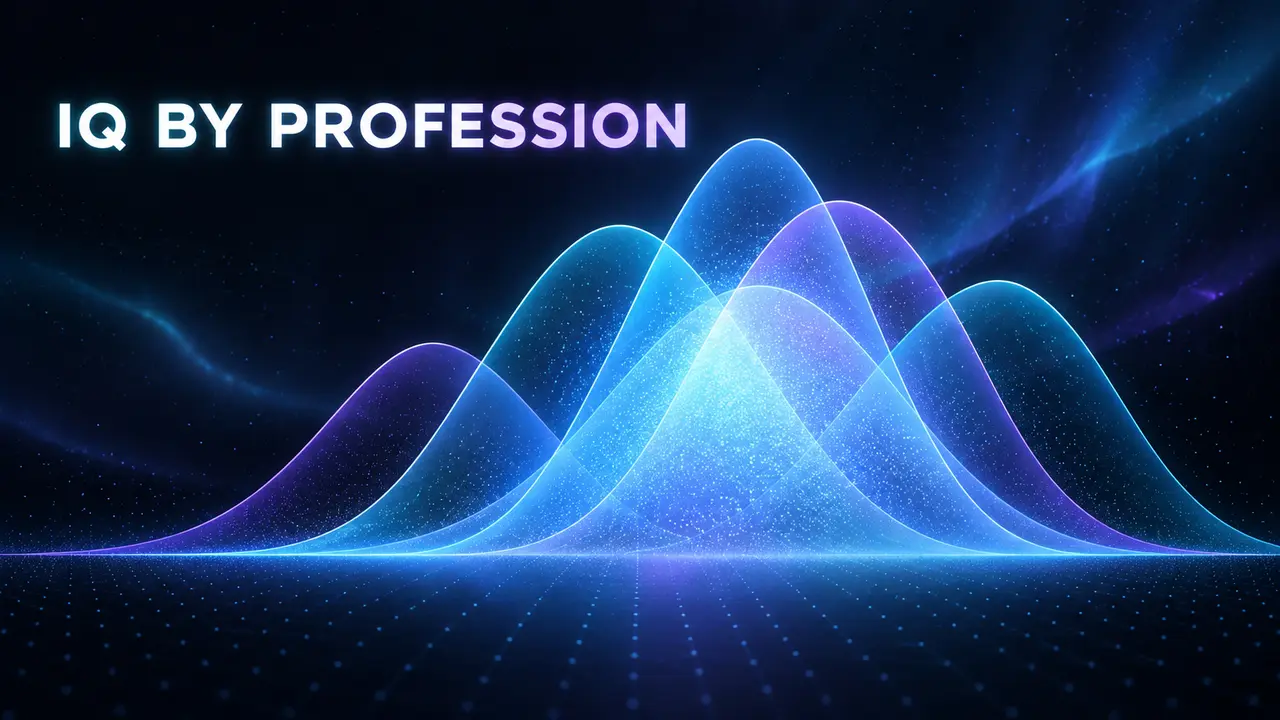 Data
Data
IQ by profession: what the occupational data shows, and what it does not
Average scores differ by occupation, and the spread within each occupation is wider than the gaps between them. That second fact is the interesting one.
8 min readStart with your own result
Ten questions, no sign-up, and a band rather than an invented number.